


leifbanvard656
leifbanvard656
Rent, Mortgage, Or Just Stack Sats?
Join Drake At Stake – America’s Social Casino. Claim $25 Stake Cash FREE – PLAY NOW
– Keep your crypto and get liquidity.
– Compare rates and get funds in minutes.
– Use BTC, SOL, ETH, and more as collateral for a loan.
Rent, mortgage, or simply stack sats? First-time homebuyers hit historic lows as Bitcoin exchange reserves diminish
Share
U.S. family debt simply hit $18T, mortgage rates are harsh, and Bitcoin’s supply crunch is intensifying. Is the old path to wealth breaking down?

Table of Contents
Realty is slowing – quick
From deficiency hedge to liquidity trap
A lot of homes, too few coins
The flippening isn’t coming – it’s here
Property is slowing – quickly

For years, real estate has actually been one of the most dependable ways to build wealth. Home worths typically increase gradually, and residential or commercial property ownership has actually long been thought about a safe investment.
But right now, the housing market is showing signs of a downturn unlike anything seen in years. Homes are sitting on the market longer. Sellers are cutting prices. Buyers are battling with high mortgage rates.
According to current information, the typical home is now selling for 1.8% below asking rate – the greatest discount rate in almost 2 years. Meanwhile, the time it requires to offer a common home has extended to 56 days, marking the longest wait in five years.
BREAKING: The average US home is now selling for 1.8% less than its asking rate, the largest discount in 2 years.
This is likewise among the most affordable readings since 2019.
It existing takes an average of ~ 56 days for the common home to offer, the longest period in 5 years … pic.twitter.com/DhULLgTPoL
In Florida, the downturn is much more pronounced. In cities like Miami and Fort Lauderdale, over 60% of listings have stayed unsold for more than 2 months. Some homes in the state are offering for as much as 5% listed below their market price – the steepest discount in the country.
At the very same time, Bitcoin (BTC) is becoming an increasingly attractive option for investors looking for a limited, valuable asset.
BTC just recently hit an all-time high of $109,114 before drawing back to $95,850 since Feb. 19. Even with the dip, BTC is still up over 83% in the past year, driven by surging institutional demand.
So, as property ends up being more difficult to offer and more costly to own, could Bitcoin emerge as the ultimate store of value? Let’s discover.
From deficiency hedge to liquidity trap
The housing market is experiencing a sharp downturn, weighed down by high mortgage rates, inflated home costs, and declining liquidity.

The typical 30-year mortgage rate remains high at 6.96%, a plain contrast to the 3%-5% rates typical before the pandemic.
Meanwhile, the median U.S. home-sale rate has actually increased 4% year-over-year, however this increase hasn’t translated into a stronger market-affordability pressures have kept demand suppressed.
Several crucial trends highlight this shift:
– The median time for a home to go under contract has jumped to 34 days, a sharp boost from previous years, indicating a cooling market.
– A full 54.6% of homes are now offering listed below their sticker price, a level not seen in years, while just 26.5% are offering above. Sellers are increasingly required to adjust their expectations as buyers acquire more leverage.
– The average sale-to-list rate ratio has fallen to 0.990, reflecting more powerful buyer settlements and a decrease in seller power.
Not all homes, however, are impacted similarly. Properties in prime areas and move-in-ready condition continue to attract purchasers, while those in less preferable areas or needing remodellings are dealing with high discount rates.
But with borrowing expenses surging, the housing market has become far less liquid. Many potential sellers hesitate to part with their low fixed-rate mortgages, while buyers struggle with higher regular monthly payments.
This absence of liquidity is a basic weakness. Unlike Bitcoin, which can be traded 24/7 with near-instant execution, property deals are slow, costly, and typically take months to finalize.
As economic uncertainty remains and capital seeks more effective shops of value, the barriers to entry and sluggish liquidity of real estate are ending up being significant drawbacks.
A lot of homes, too few coins
While the housing market has a hard time with increasing inventory and weakening liquidity, Bitcoin is experiencing the opposite – a supply squeeze that is sustaining institutional need.
Unlike realty, which is influenced by debt cycles, market conditions, and continuous advancement that broadens supply, Bitcoin’s total supply is at 21 million.
Bitcoin’s absolute deficiency is now clashing with rising need, especially from institutional financiers, strengthening Bitcoin’s function as a long-lasting store of value.
The approval of area Bitcoin ETFs in early 2024 set off a huge wave of institutional inflows, drastically shifting the supply-demand balance.
Since their launch, these ETFs have actually attracted over $40 billion in net inflows, with financial giants like BlackRock, Grayscale, and Fidelity managing most of holdings.

The need rise has actually absorbed Bitcoin at an unprecedented rate, with everyday ETF purchases varying from 1,000 to 3,000 BTC – far surpassing the approximately 500 brand-new coins mined each day. This growing supply deficit is making Bitcoin increasingly scarce outdoors market.
At the very same time, Bitcoin exchange reserves have dropped to 2.5 million BTC, the most affordable level in three years. More financiers are withdrawing their holdings from exchanges, indicating strong conviction in Bitcoin’s long-lasting prospective instead of treating it as a short-term trade.
Further enhancing this trend, long-term holders continue to dominate supply. Since December 2023, 71% of all Bitcoin had actually stayed unblemished for over a year, highlighting deep financier dedication.
While this figure has actually somewhat declined to 62% since Feb. 18, the more comprehensive pattern points to Bitcoin becoming an increasingly firmly held property gradually.
The flippening isn’t coming – it’s here
As of January 2025, the average U.S. home-sale rate stands at $350,667, with mortgage rates hovering near 7%. This mix has pressed month-to-month mortgage payments to record highs, making homeownership increasingly unattainable for more youthful generations.
To put this into viewpoint:
– A 20% down payment on a median-priced home now surpasses $70,000-a figure that, in numerous cities, exceeds the total home cost of previous decades.
– First-time homebuyers now represent just 24% of total purchasers, a historical low compared to the long-term average of 40%-50%.
– Total U.S. home financial obligation has actually surged to $18.04 trillion, with mortgage balances accounting for 70% of the total-reflecting the growing financial problem of homeownership.
Meanwhile, Bitcoin has actually outperformed realty over the past years, boasting a compound annual growth rate (CAGR) of 102.36% given that 2011-compared to housing’s 5.5% CAGR over the exact same period.
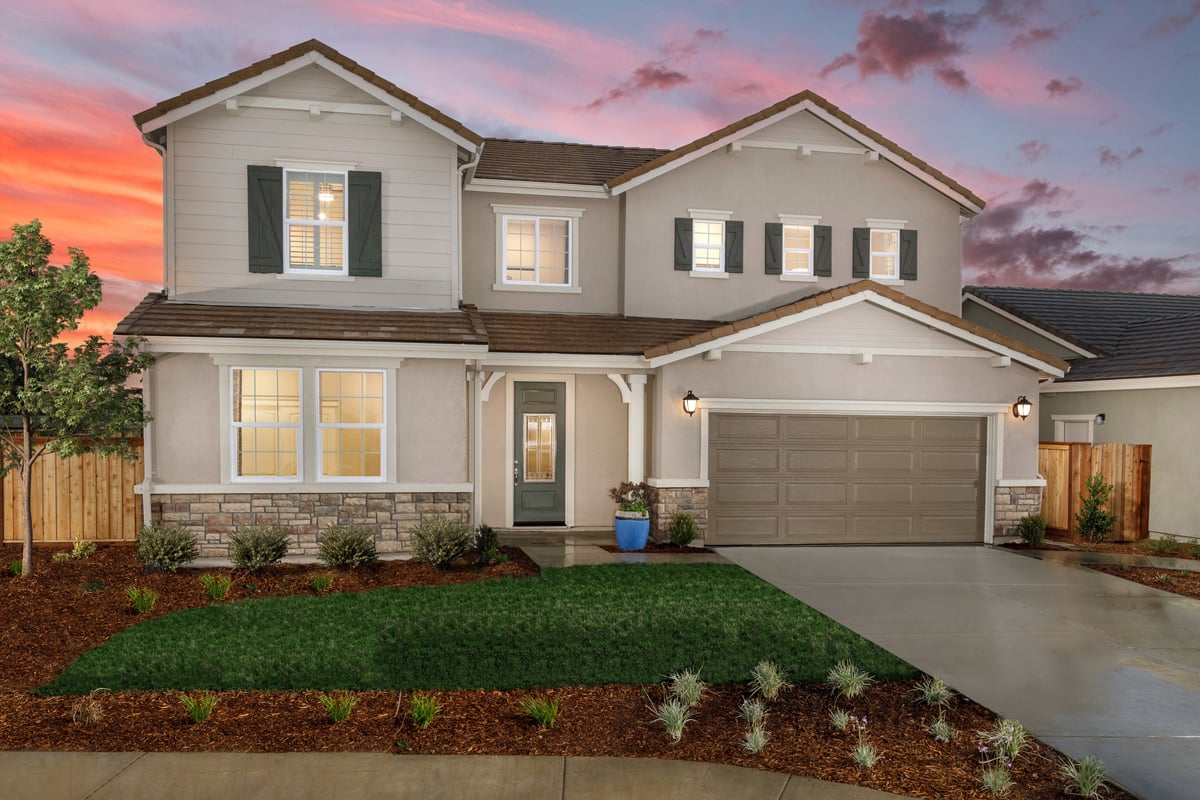
But beyond returns, a deeper generational shift is unfolding. Millennials and Gen Z, raised in a digital-first world, see standard financial systems as slow, rigid, and outdated.
The concept of owning a decentralized, borderless property like Bitcoin is even more enticing than being tied to a 30-year mortgage with unforeseeable residential or commercial property taxes, insurance costs, and maintenance expenses.
Surveys recommend that younger investors progressively prioritize monetary versatility and mobility over homeownership. Many prefer leasing and keeping their assets liquid rather than committing to the illiquidity of realty.
Bitcoin’s portability, day-and-night trading, and resistance to censorship align perfectly with this state of mind.
Does this mean property is becoming obsolete? Not entirely. It stays a hedge against inflation and a valuable property in high-demand locations.
But the inefficiencies of the housing market – combined with Bitcoin’s growing institutional acceptance – are reshaping financial investment preferences. For the very first time in history, a digital possession is competing directly with physical realty as a long-term shop of worth.
